What is education for a democratic culture?
Living together as equals in culturally diverse European societies requires a deep understanding of a democratic culture.
Young people need to develop competences that combine knowledge, skills, values and attitudes.
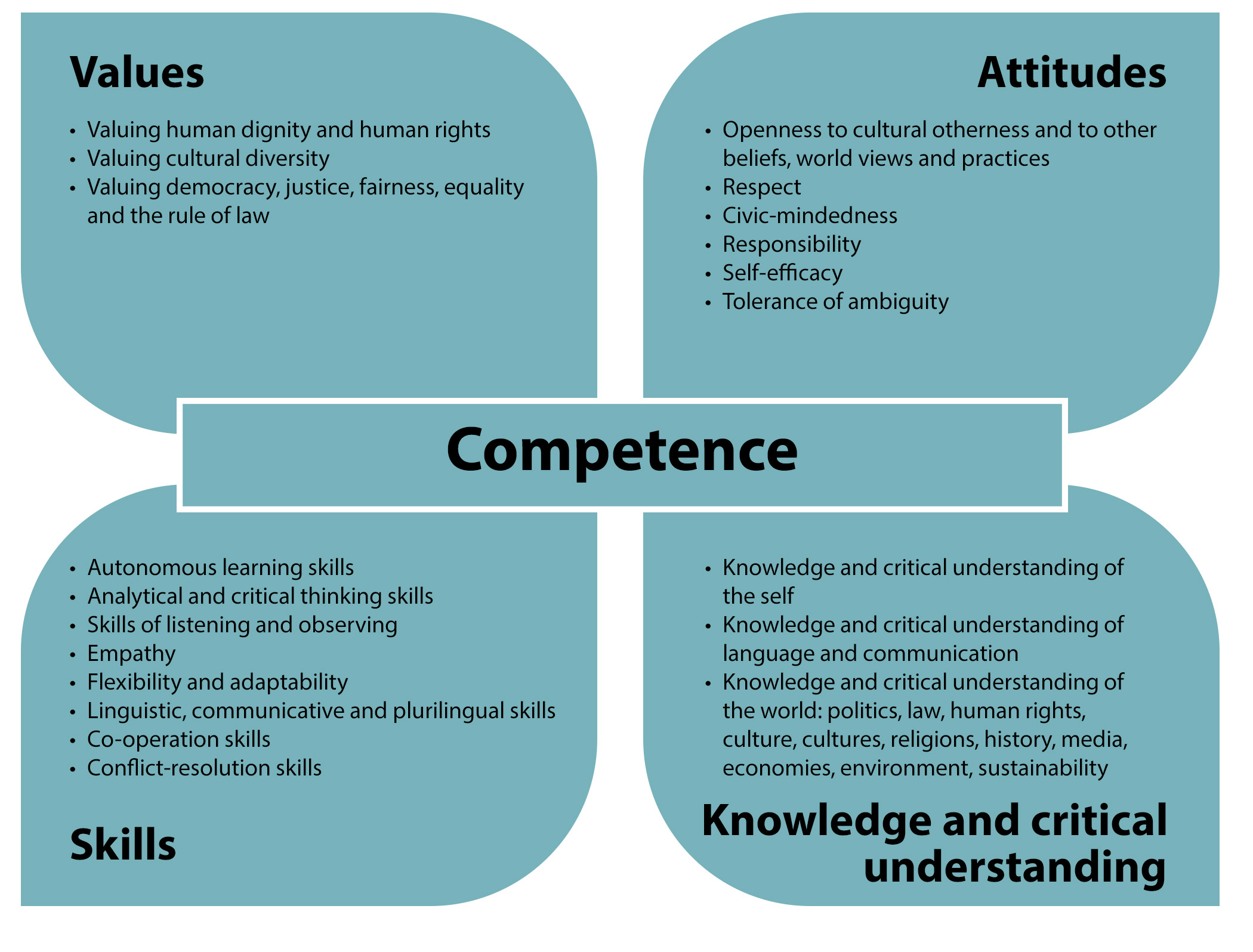
Education of competences for a democratic culture pursues a transversal approach that affects school life as well as every subject and every learning area.
For this reason, the didactic materials developed in Tres'OR are thematic and project-based.
The aim is to enable young people to become active, democratic citizens who are able and willing to stand up for their society, to shape it and to live and defend democratic values.
Education for a democratic culture is a preparation for life in society, on the labour market and in the world of digitalisation, which increasingly requires ethical thinking and action - on the basis of democratic values.
Why is education important for a democratic culture?
The political developments of recent years at European and global level clearly show that democracy and living in a democratic culture cannot be taken for granted.
Education for a democratic culture means giving young people a deep awareness of the history of European integration - especially the European Union and the Council of Europe - and its democratic values. These values have laid the foundations for a free and peaceful society after the devastating experiences of two world wars and an inhuman dictatorship.
It requires considerable effort, especially in our border region, to train young people to become strong democrats who are committed to the future of Europe and its liberal values.
Translated with DeepL.com (free version)
How does Tres'OR engage with education for a democratic culture?
Tres'OR will not develop pedagogical formats for democracy education in the sense of traditional political education. Instead, didactic materials will be created that contain scenarios, tasks and projects in which pupils actively deal with questions of democratic action. They learn to make decisions together - even when opinions and views differ - and practise key democratic skills in the process: making compromises, respecting cultural differences, dealing with ambiguity and representing their own points of view clearly and respectfully.
The focus is on the personal development of children and young people to become active, democratic citizens in the Upper Rhine region and in Europe.
To this end, didactic materials for cross-border school and class projects as well as accompanying training courses for teachers are being developed.