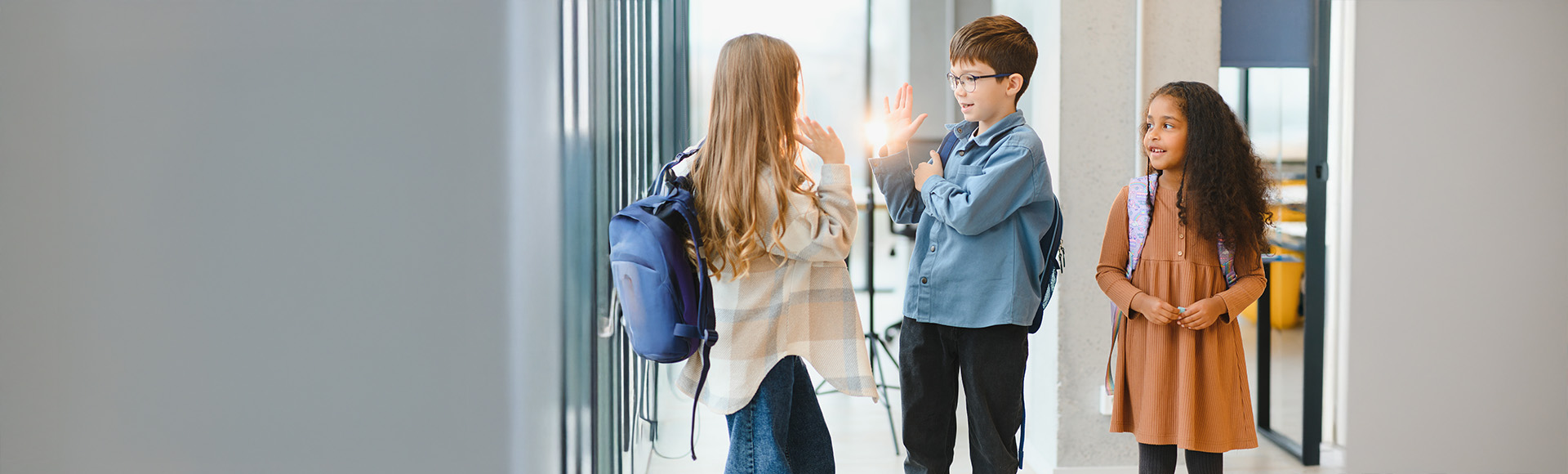
Education for multilingual and intercultural competence means giving people the ability to move confidently and respectfully in different cultural and linguistic contexts. Multilingualism involves not only learning new languages, but also the ability to switch flexibly between different linguistic and cultural perspectives. Intercultural competence trains the understanding and handling of cultural diversity - it promotes empathy, openness and the ability to appreciate and classify other perspectives and behaviors. Together, these skills strengthen the understanding of cultural diversity in our society and support peaceful, communal coexistence.
In a globalized and increasingly interconnected world, multilingual and intercultural skills are of central importance. They are indispensable for communicating successfully in international work contexts, living in multicultural societies and contributing to understanding between different cultures. Especially in a border region such as the Upper Rhine, where people from different countries and cultures interact with each other on a daily basis, this form of education is crucial for promoting mutual understanding, breaking down prejudices and developing a common identity in diversity. Multilingual and intercultural skills strengthen social and cultural integration and make it possible to build bridges between cultures.
Tres'OR promotes the development of multilingual and intercultural skills through a variety of educational programs for students and teachers in the Upper Rhine region. The project develops educational materials and projects that aim to give pupils access to several languages and at the same time convey an understanding of the cultural diversity of the region. Linguistic and cultural differences are conveyed as an enrichment and learning opportunity. Teachers also receive special training that helps them to methodically integrate intercultural topics and language acquisition into their lessons and thus create an atmosphere of respect and openness. Tres'OR thus helps to ensure that young people in the Upper Rhine region grow up to be open-minded and linguistically adept citizens who appreciate and promote the potential of their region's cultural and linguistic diversity.